
Organoid Infection Atlas
-
RSV
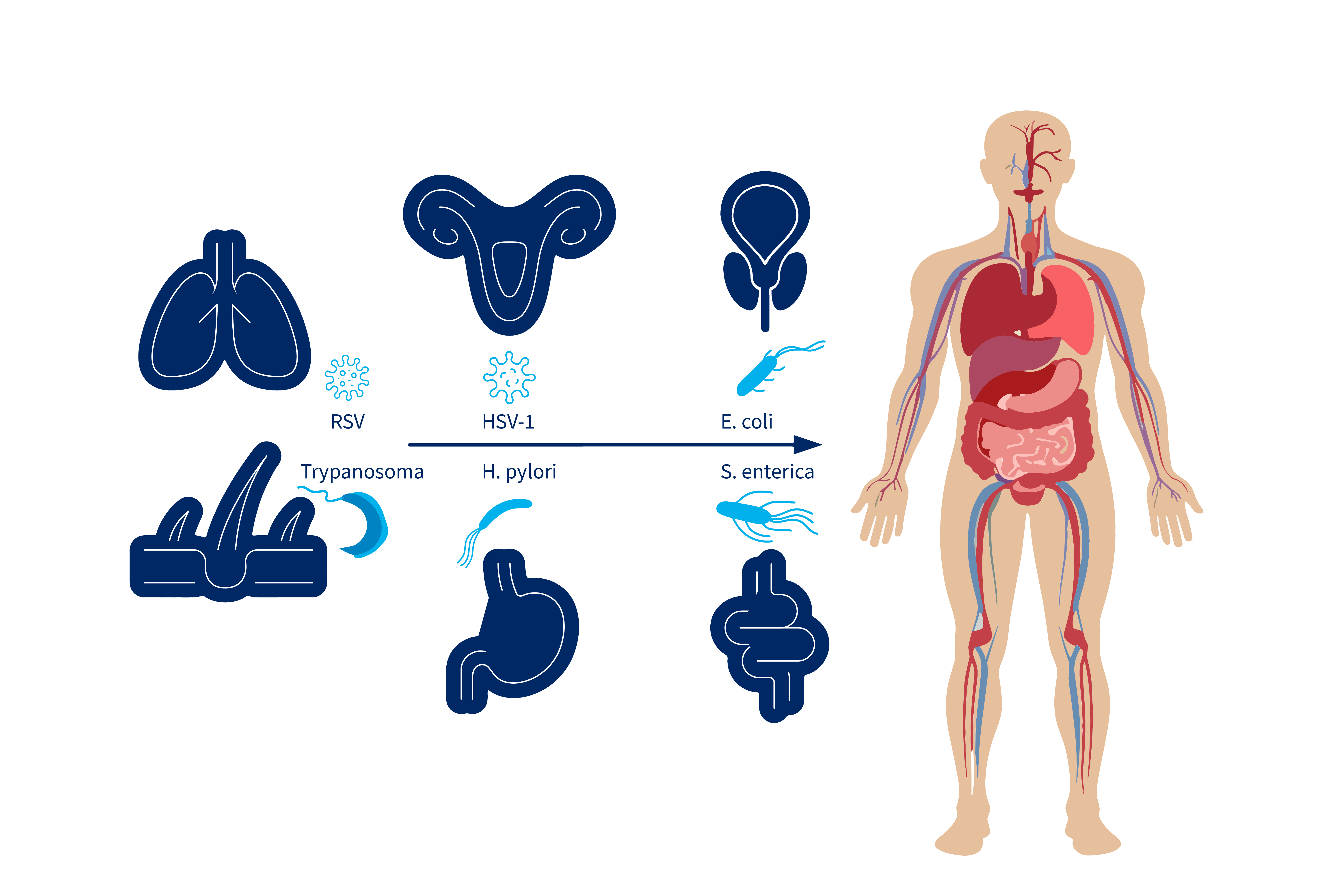
Respiratory syncytial virus (RSV) can cause severe lower respiratory tract infections in infants, older adults, and individuals with chronic or immunocompromising conditions. To understand how RSV affects airway cells, we infected primary human airway epithelial cultures with RSV and analyzed infected and bystander cells using time-resolved single-cell RNA sequencing and imaging.
-
Trypanosoma
Transmission of Trypanosoma brucei by tsetse flies involves the deposition of the cell cycle-arrested metacyclic life cycle stage into mammalian skin at the site of the fly’s bite. We introduce an advanced human skin equivalent and use tsetse flies to naturally infect the skin with trypanosomes.
-
Helicobacter pylori
The human gastric epithelium forms highly organized gland structures with different subtypes of cells. The carcinogenic bacterium Helicobacter pylori can attach to gastric cells and subsequently translocate its virulence factor CagA, but the possible host cell tropism of H. pylori is currently unknown. Here, we report that H. pylori preferentially attaches to differentiated cells in the pit region of gastric units.
-
Escherichia coli (UPEC)
Bacterial prostatitis caused by uropathogenic Escherichia coli (UPEC) strains is a highly prevalent and recurrent infection responsible for significant morbidity in men. The molecular pathogenesis of prostatitis remains poorly understood, partly due to a lack of suitable in vitro models. Here we developed a 2D mouse stem cell-derived prostate epithelial organoid model.
-
Salmonella enterica serovar Typhimurium
We combined a biological extracellular matrix with primary tissue-derived enteroids to establish an in vitro model of the human small intestinal epithelium exhibiting in vivo-like characteristics. Using the foodborne pathogen Salmonella enterica serovar Typhimurium, we demonstrated the applicability of our model to enteric infection research in the human context.
-
HSV-1
We present an organotypic human ectocervix mucosa (hEcCxM) model, generated by coculturing primary ectocervix epithelial cells and fibroblasts on a plastically compressed collagen hydrogel.




