
Myeloid Infection Atlas
Myeloid cells are a major reservoir for viral, bacterial, and eukaryotic pathogens, allowing these pathogens to replicate and persist for extended periods. Although these host cells are equipped with an armada of antimicrobial defenses, pathogens have opportunistically exploited their intracellular milieu. Myeloid cells are also highly plastic, diversifying into a multitude of states. Single-cell RNA-seq is transforming our understanding of the diverse fates of pathogen–myeloid cell interactions, revealing the extent of variability between cells. Here, we provide compelling examples of how pathogens can remodel myeloid cells.
Macrophage Salmonella interaction
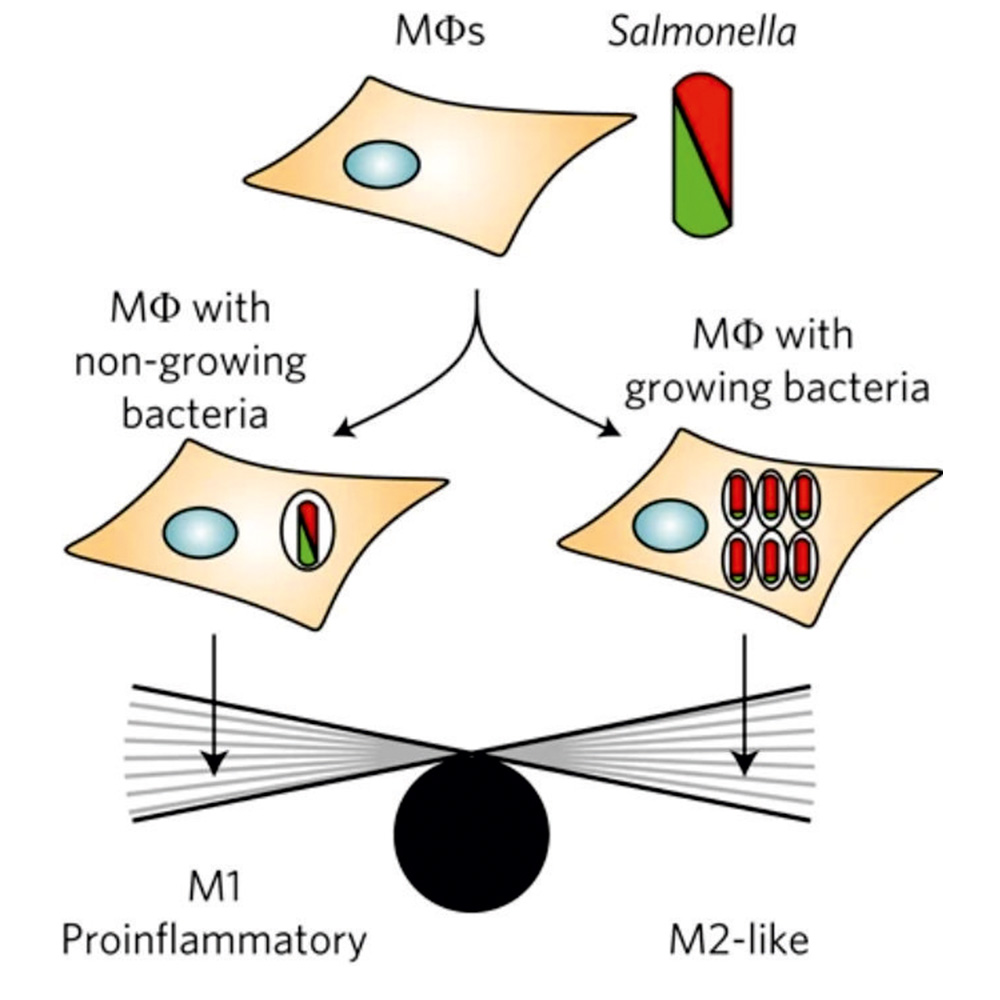
The study examines how macrophages respond to intracellular Salmonella with different growth rates using single-cell RNA sequencing and a bacterial replication reporter. It reveals that infected macrophages show diverse responses depending on bacterial activity. Macrophages containing non-growing bacteria exhibit a pro-inflammatory profile, similar to uninfected cells, suggesting these bacteria may evade immune detection. In contrast, macrophages with actively growing bacteria display an anti-inflammatory state, indicating that replicating Salmonella can manipulate host cells to support its survival. The authors also identify intermediate macrophage states, showing that host responses form a continuum rather than distinct categories. Overall, the study highlights how variation in bacterial growth influences immune responses, shaping environments that either restrict bacterial replication or enable persistence.
Dendritic cells HCMV interaction
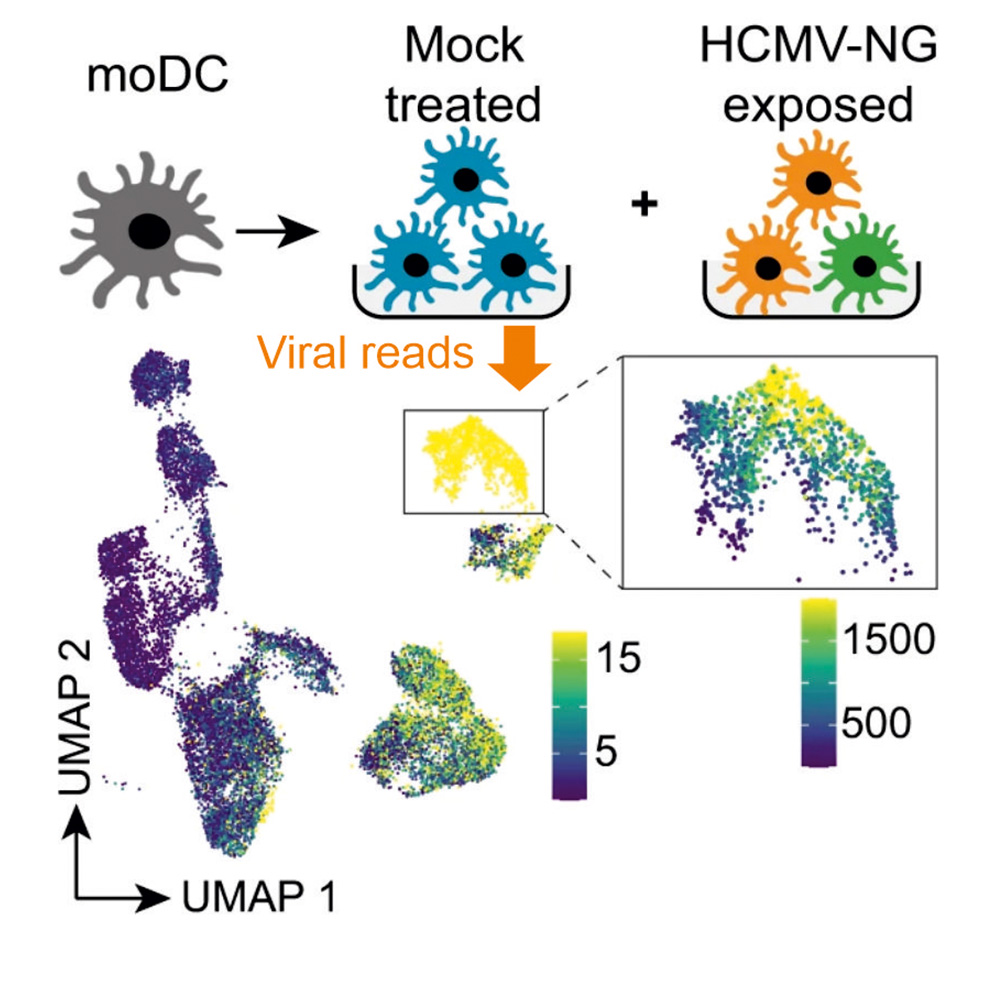
Human cytomegalovirus (HCMV) is a widespread pathogen that can cause life-threatening disease in immunocompromised individuals. Single-cell RNA sequencing of HCMV-exposed monocyte-derived dendritic cells reveals that only a minority of cells initiate viral replication, with early infection triggering an antiviral interferon response that the virus subsequently suppresses—enabling productive infection and underscoring a dynamic interplay between host sensing, immune regulation, and viral gene expression.
Leishmania monocyte interaction
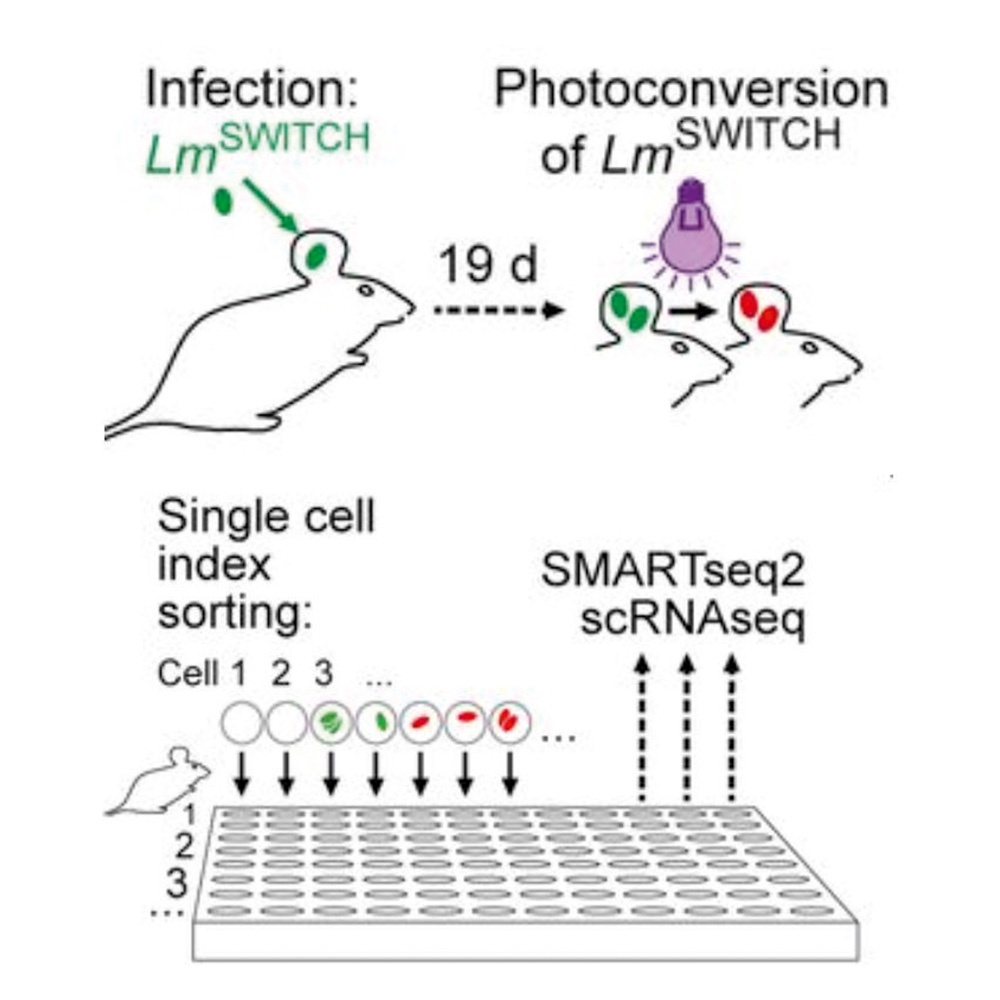
Single-cell RNA-seq is combined with an in vivo pathogen fluorescence proliferation reporter system to characterize the function of distinct monocyte-derived subpopulations in the context of their interactions with intracellular pathogens. With the help of this approach, a subset of Podoplanin (PDPN)-and Interleukin-7 receptor (IL-7R) expressing cells is identified which are derived from monocytes and preferentially harbor low-proliferating L. major. This PDPN+IL-7R+ population exhibited a hypo-inflammatory phenotype and suppressed effector functions of L. major-specific CD4+ T cells.




